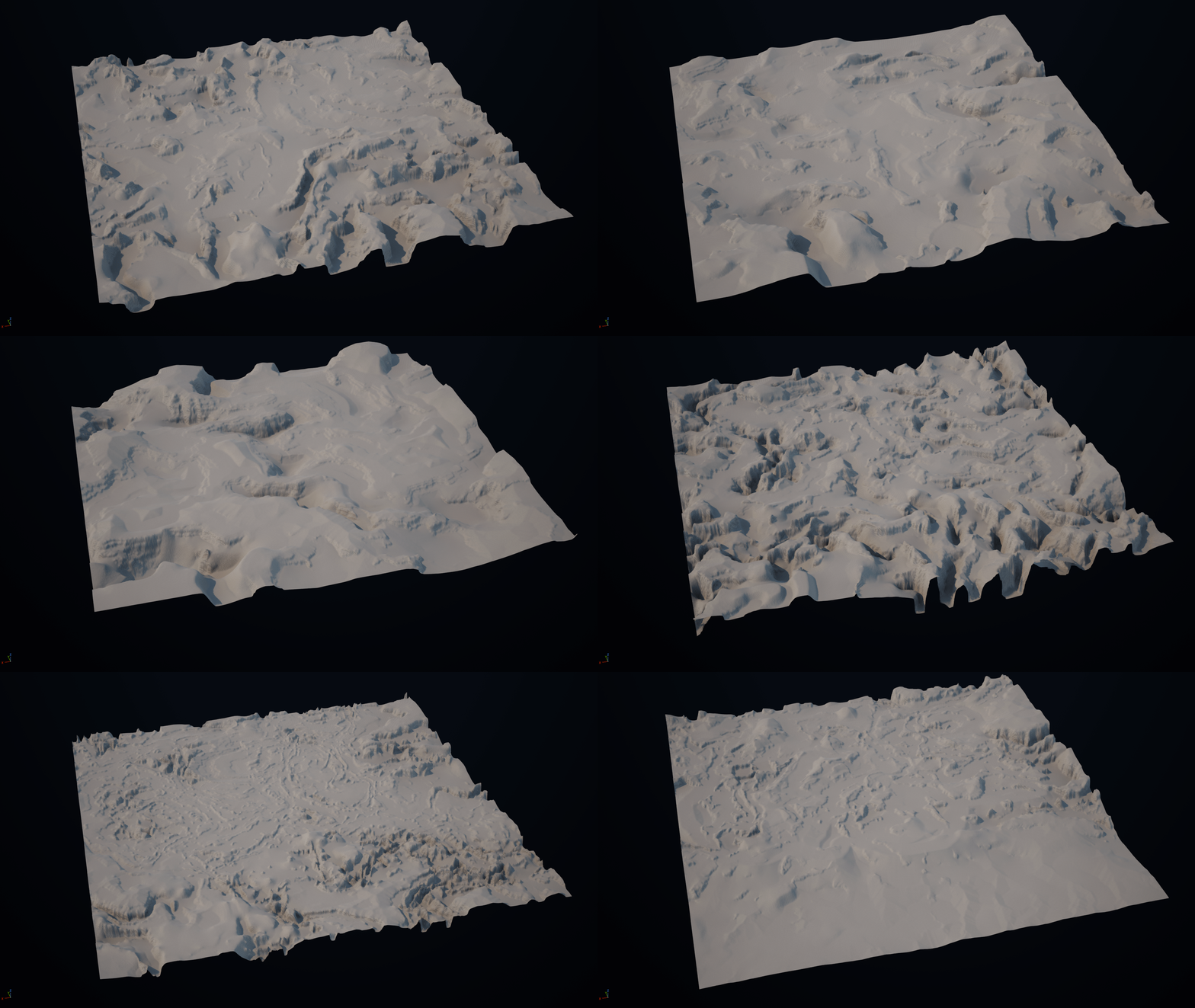
Different generated landscapes from adjusting the terrain seed as well as other parameters such as mountain amplitude, terracing, and number of pathways generated.
Early breakdown of the basic workflow for generating a base terrain of an arid biome map.

Example of the "Populate" HDA that is used after generating terrain to randomly scatter and instance cliffs, trees, grass, and debris.

Each biome type has unique functionality in the Houdini HDA to generate unique landscape layer masks and automatically assign the corresponding landscape master material in the Unreal editor.

Side-by-side of the Houdini HDA used to generate the heightfield/terrain in Unreal, and the parameters exposed in the Unreal Editor


Wartorn relies on a steady supply of fresh levels, and authoring each one by hand — sculpting the terrain, routing paths through it, dressing it with props, and assigning materials — is both slow and prone to producing maps that start to feel the same. To address this, a suite of procedural level-building tools was built in Houdini and delivered to the design team as HDAs they could drive directly in-editor, with the goal of letting a designer assemble a complete, varied level from a small set of parameters rather than building every piece by hand.
At the core is a Terrain Tool that generates the playable ground from a handful of high-level controls — the type of terrain (mountain, shore, plains, and so on), along with amplitude, irregularity, and pathway building — so a designer can dial in the broad character of a map and get usable geometry out the other end. From there, a set of scatter tools handles populating it, again parameter-driven by the kind of object being placed (trees, manmade structures, debris collecting at the bottoms of slopes, and so on), with placement that reacts to the underlying terrain rather than dropping objects in blindly.
The last step is handled automatically: generated terrain is materialized based on its biome type, so the surface is textured to match the environment without a separate manual pass. Taken together, the tools carry a level from a few designer-facing settings all the way to finished, dressed geometry — turning what would otherwise be slow, repetitive hand-authoring into something the design team could iterate on quickly and vary widely from map to map.


